Healthier Smiles with Palatal Expanders.
Orthodontic treatment often includes a palatal expander, but many parents don’t know much about them! At Atlanta Orthodontic Specialists, we understand that every parent wants to be fully informed about every aspect of their child’s orthodontic care. So, we put this page together to answer all your questions about palatal expanders so you can make the right choices for your child’s orthodontic health.

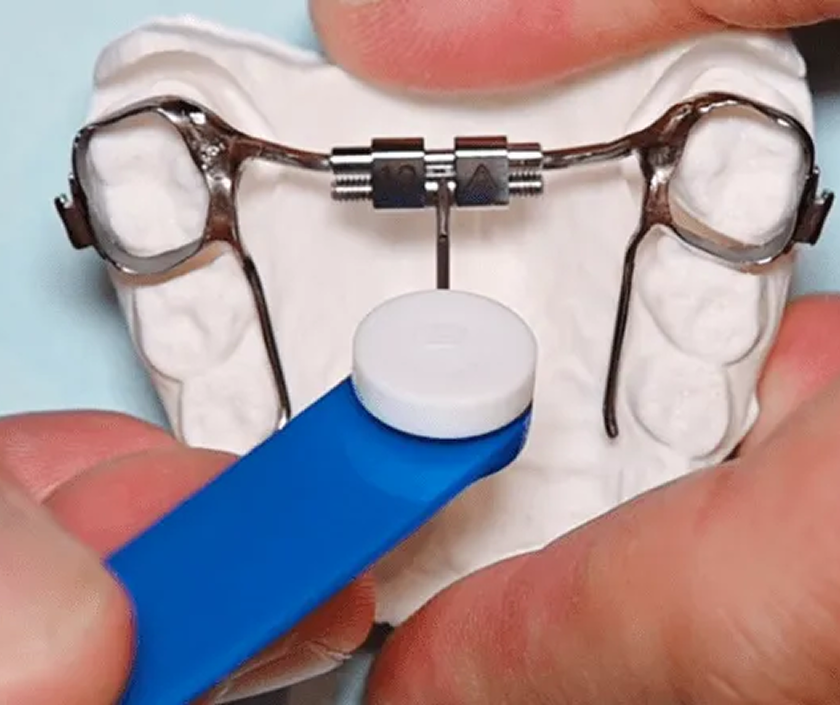
What Is A Palatal Expander?
A palatal expander is an appliance that’s used to expand a child’s palate (the roof of the mouth), creating enough room for all of the adult teeth to fit comfortably. The goal is not just to move the teeth, but to widen the jaw itself. Expanding the upper jaw is done gradually, gently spreading apart the bones and cartilage of the upper jaw over months. There are many different types of expanders, and the specific type of expander that your child needs will be determined by your orthodontist.
How Does A Palatal Expander Work?
A palatal expander has either two or four rings or “bands” that are wrapped around a tooth on either side of your child’s mouth. In the middle of the expander is a small gear. With your help, your child will insert and turn a key in the gear every so often (according to the doctor’s advice) to slightly increase the outward tension of the expander. With each turn, the increased tension gradually spreads the palate apart to create more space for incoming teeth.

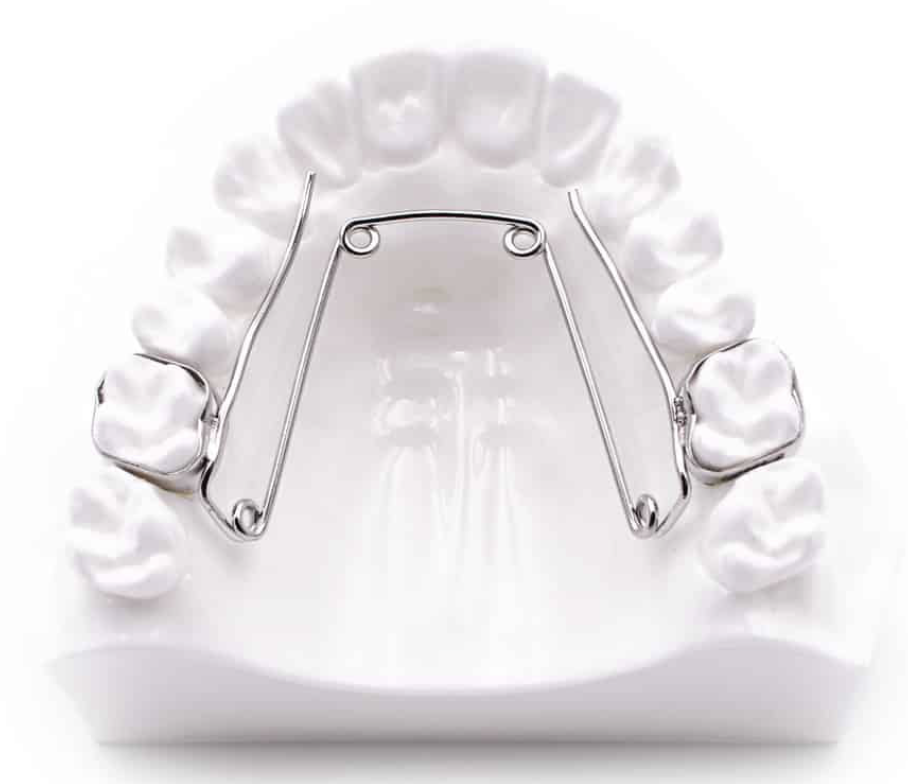
How Does A Quad-Helix Work?
Instead of a “gear” that is turned every night, the quad helix has four loops (or helices) that essentially make this type of expander a large spring. When inserted, the orthodontist takes the appliance and widens these loops. That way, once the appliance is in place, it will provide a constant and gentle pressure to widen the palate and teeth. Unlike a “Hyrax” expander, this appliance is adjusted only by the orthodontist at regular visits.
When Should My Child Get a Palatal Expander?
Timing expander treatment is very important. Palatal expanders should ideally be used before the two separate plates of the palate fuse together in puberty (around age 14-16). Because of this, expanders may be recommended as early as 6-10 years old, as they typically work best on younger children. Expansion on younger patients is easier, and there are more options in terms of the type of expanders that we use. If done early, expansion can be simpler and more effective. Sometimes, expansion may be delayed until more permanent teeth erupt (12-14 years old), but it is important to begin treatment with an expander prior to the fusion of the upper palate bones.

Here Are Three Common Situations Where We Recommend an Expander.
Invisalign® has a convenient tooth-straightening three-step process.
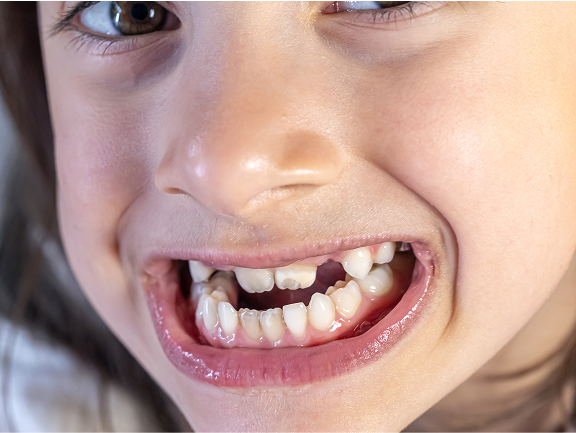
Underbite
The child’s upper jaw is narrower than the lower jaw, resulting in the back top teeth biting inside the back bottom teeth.
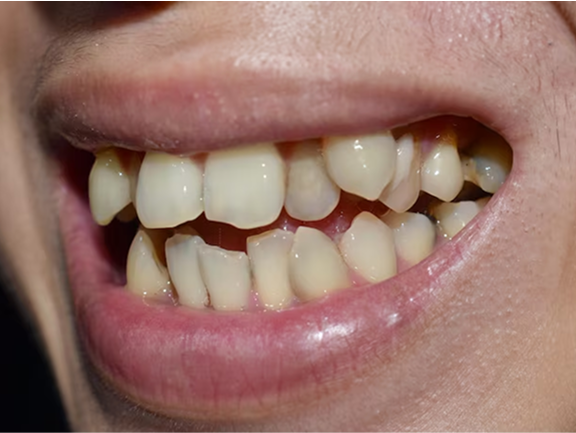
Crossbite
Using X-rays and our years of experience helping Atlanta kids enjoy beautiful, straight smiles, we can tell ahead of time that your child’s mouth isn’t large enough to accommodate all their incoming adult teeth. Widening the upper jaw can create the space needed for a straight smile without extractions.
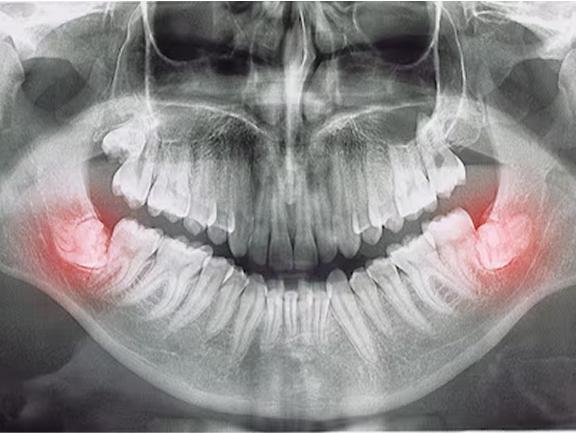
Impacted teeth
Sometimes adult teeth don’t emerge on schedule because they are blocked by other teeth in a crowded young mouth. Expansion widens the space available for adult teeth to erupt without interference.
Frequently Asked Questions.
Will a Palatal Expander Change the Way My Child’s Face Looks?
Some parents worry that, besides correcting any underlying structural issues, a palatal expander will alter their child’s face shape in a noticeable or unflattering way. Fortunately, the changes that a palatal expander makes are subtle and almost always positive.
Widening the upper jaw can actually improve facial symmetry, creating a broader and more natural smile. In some cases, an expander can also help open a patient’s nasal passages, reducing mouth breathing and improving sleep quality.
These sorts of changes happen over a period of months, so there’s no sudden change in appearance. Your Atlanta orthodontist will walk you through what to expect before treatment begins.
Is a Palatal Expander Painful for Children?
A bit of initial discomfort is common with all types of orthodontic treatments—palatal expanders included. However, most children find it manageable.
When the expander is first placed in your child’s mouth, they may notice pressure, increased salivation, and some difficulty speaking as their mouth adjusts. After each activation, your child may feel small amounts of renewed pressure and soreness on the roof of their mouth, teeth, and behind their eyes or nose. While uncomfortable, palatal expander discomfort is normal and indicates that the activation is working as expected.
Discomfort typically fades within a few minutes to a few hours. Soft foods and over-the-counter pain relievers can help on activation days. That said, most children adapt more quickly to the new appliance than parents expect—often within a week or two.
Will My Child Be Able to Eat and Speak Normally With an Expander?
After a short adjustment period, yes—your child will be able to eat and speak normally with a palatal expander in place. During the first week, you may notice some difficulty pronouncing “s” and “sh” sounds as the tongue learns to work around the appliance. Consistent speaking and reading aloud can help expedite this adjustment.
In terms of eating, soft foods are ideal during the first few days, as well as after each activation. Hard, crunchy, and sticky foods are best avoided throughout the treatment process, as they can damage the palatal expander. After eating, encourage your child to rinse their mouth with water and gently brush around the appliance to maintain proper oral hygiene.
What Happens After the Palatal Expander Comes Out?
Once your child’s palate has been widened to the target dimension, your Atlanta orthodontist will likely leave it in place for an additional retention period of several months. This allows the new bone to solidify across the expanded palate.
After the expander is removed, your child will be ready to progress further through their orthodontic treatment process. Braces or clear aligners may then be used to guide the newly available space into a beautiful, straight smile.
At Atlanta Orthodontic Specialists, we’ll map out the entire treatment sequence at the start so you and your child know what to expect at each stage.
What’s the Difference Between a Hyrax Expander And a Quad-Helix?
Both Hyrax and quad-helix expanders are palatal expanders, meaning they bond to your child’s teeth and stay in place throughout treatment. That said, they work a bit differently from one another.
A Hyrax expander uses a central gear mechanism that parents need to activate nightly by inserting and turning a small key a precise amount. This gives your Atlanta orthodontist deliberate control over the pace of expansion.
On the other hand, a quad-helix uses four looped springs that are pre-activated by your orthodontist at each visit, providing constant, gentle pressure without the need for at-home adjustments. This makes the quad-helix a good fit for younger patients or situations where a parent-activated appliance isn’t practical.
Your orthodontist will assess the palatal expander types and recommend an option based on your child’s age, the extent of expansion needed, and other factors.
Can Adults Get Palatal Expanders?
Palatal expanders work best in children and younger teenagers, as palate bones typically fuse between the ages of 14 and 16. Before fusing, appliances can gently separate the two plates of the palate, allowing new bone to form in the gap. This makes expansion relatively straightforward.
Adult palate bones have already fused into a single structure, making traditional expanders ineffective. Adult patients who require palatal expansion may be candidates for a surgical procedure called SARPE (Surgically Assisted Rapid Palate Expansion), which uses a minor surgical intervention to allow expansion to proceed.
This limitation is why booking an orthodontics consultation in Atlanta at a young age is so important—catching a narrow palate during childhood makes treatment simpler, less invasive, and more effective.
Get Your Free Consultation.
Start the journey toward a straighter smile today!